

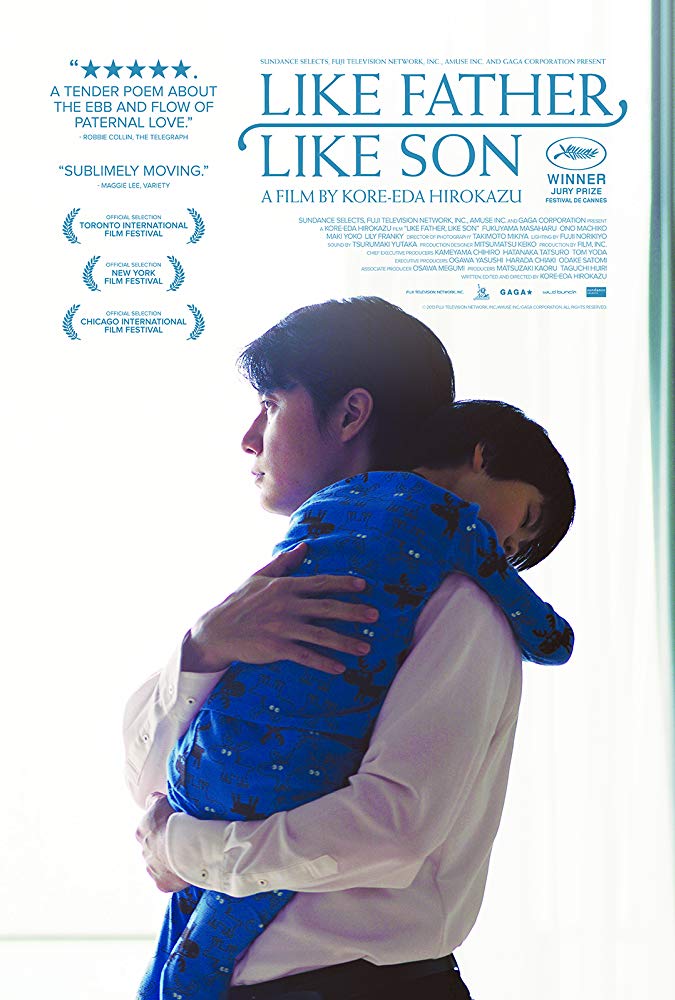
"Und ich werde sein Vater sein" - so lautet der japanische Originaltitel, übersetzt man getreu mit google. Den internationalen Titel verstehe ich nicht. Hirokazu Kore-eda, dessen Filme sehr, sehr gefühlsbetont sind, aber auch phantastische Fabeln bieten, entwirft hier ein Szenarario, dass unsere Herzen brechen wird! Sechs Jahre, nachdem eine Familie ihr Kind gross gezogen hat, erfahren sie: Das Kind ist nicht von ihnen- zumindest nicht biologisch! - Die Eltern Nonomiya versuchen den sechsjährigen Keita an einer Privatschule vorzustellen. Sie hoffen, ihrem Jungen dadurch einen besseren Einstieg ins Leben zu ermöglichen. Der Vater beschreibt Keita als ruhiges Kind, den Misserfolge wenig störten. Keita käme eher nach der Mutter. Zu Hause feiern sie seine Aufnahme an der Schule mit einer Torte. Kurz darauf aber erhalten Ryota und Midori Nonomiya einen Anruf vom Krankenhaus: Keita wurde nach der Geburt vertauscht. Ihr eigener Sohn wuchs versehentlich in einer anderen Familie auf und heisst heute Ryusei. Keita ist das Kind der Saikis. Die Saikis kommen aus einem anderen Milieu. Ryota Nonomiya ist erfolgreicher Architekt, Yukari Saiki Elektrohändler. Beide könnten unterschiedlicher nicht sein! Sie vergleichen ihre Familien-Fotos: Keita, streng herausgeputzt, Ryusei ganz vergnügt. Beide Familien stehen vor einem Dilemma, beiden wird Leid zugefügt werden... Like Father, Like Son ist so subtil und schnörkellos erzählt - vielleicht ist das der Grund, weshalb Kore-eda in der zweiten Filmhälfte einen dunklen Schatten auf seine Figuren wirft. Es wird nicht explizit gezeigt, wohl aber offenbaren die Beteiligten hier auch ihre negativen Seiten. Ich denke, dass das notwendig ist. Kaum vorstellbar, welch harter Schlag diese Situation für Eltern bedeuten würde. Hart, aber auch lohnenswert, denn was bedeutet letztlich Elternliebe? - "And I will be his father" - that's the Japanese original title, translated faithfully with google. I don't understand the international title. Hirokazu Kore-eda, whose films are very, very emotional, but also offer fantastic fables, creates a scenario that will break our hearts! Six years after a family has brought up their child, they experience: The child is not theirs - at least not biological! - Parents Nonomiya try to introduce the six-year-old Keita at a private school. They hope that this will give their boy a better start in life. The father describes Keita as a quiet child who was not disturbed by failures. Keita would rather take after her mother. At home they celebrate his reception at school with a cake. Shortly afterwards, however, Ryota and Midori Nonomiya receive a call from the hospital: Keita was switched after the birth. Her own son accidentally grew up in another family and is now called Ryusei. Keita is the child of the Saikis. The Saikis come from a different environment. Ryota Nonomiya is a successful architect, Yukari Saiki Electrical Dealer. Both couldn't be more different! They compare their family photos: Keita, dressed up, Ryusei very happy. Both families face a dilemma, both will be harmed... Like Father, Like Son is so subtle and straightforward - maybe that's why Kore-eda casts a dark shadow on his characters in the second half of the film. It is not explicitly shown, but the participants also reveal their negative sides here. I think that is necessary. It is hard to imagine what a hard blow this situation would mean for parents. Tough, but also rewarding, because what does parental love ultimately mean?
Translated with www.DeepL.com/Translator

Werde Teil der Community
Schreibe Kommentare, vote für Deine Favoriten oder sende uns Deinen Film-Vorschlag.