

Fr, 17/04/2026 - 10:57
Directed by:
Asghar Farhadi
Schauspieler:
Baran Kosari
Faramarz Gharibian
Yousef Khodaparast
Jalal Hadpor Seraj
Wie konnte es nur so weit kommen? 1979 versammelte sich die seit jeher verstrittene Linke im Iran hinter dem "Revolutionär" Khomeni, der vor ihren Augen einen Gottesstaat errichten konnte. Es ist kaum verwunderlich, dass die Linke, die sogenannten 1979er keinen grossen Respekt im Iran geniessen. Stattdessen gibt es eine Bewegung, die sich die Zeit vor 1979 zurück wünscht. Eine Bewegung ausserhalb des Irans, an der Spitze, der Sohn des Schahs. Im Land selbst hat eine bis an die Zähne bewaffnete Minderheit die Bevölkerung im Griff, schlachtet sie ab, beklaut sie. So verzweifelt sind die Menschen, dass sie sich Hilfe durch einen Krieg erhoffen.
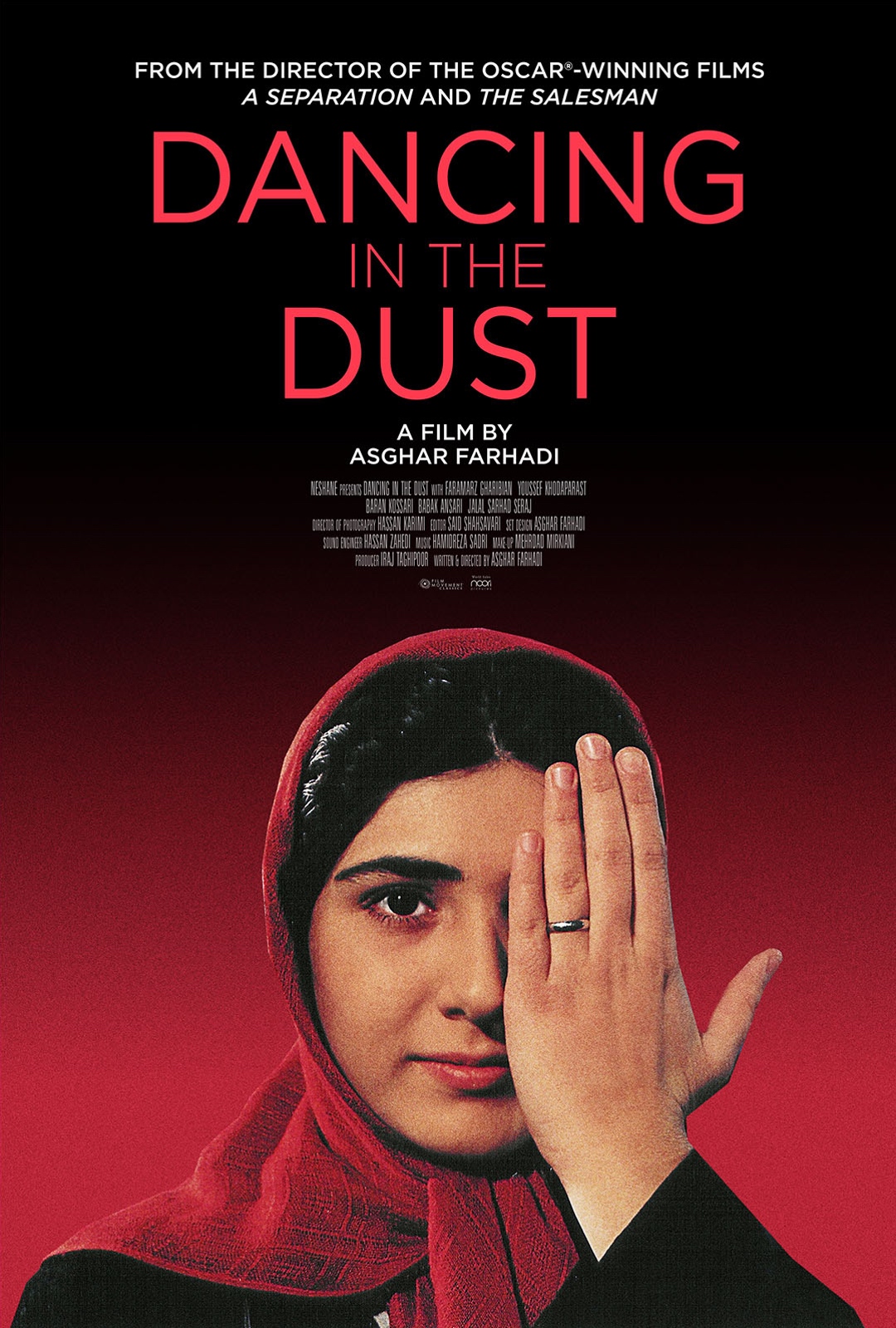
Asghar Farhadi hat seine Filme innerhalb dieses Systems gemacht. Er gewann zahlreiche Filmpreise. Sein Debüt, Dancing In The Dust wurde weltweit von den Kritikern gefeiert. Farhadis Filme sind nicht explizit politisch. Sie sind moralisch. Dancing In The Dust handelt von Ehe und von Geld. Nazar (Yousef Khodaparast) liebt seine Frau Reyhane (Baran Kosari), doch es gibt anzügliche Gerüchte über Reyhanes Mutter, weswegen Nazar die Scheidung vorbereitet. Niemand will diese Scheidung. Reyhanes Leben wird ruiniert sein. Doch Nazar hat kein Geld, ist wegen eines Kredits im Verzg. Er flieht, versteckt sich im Wagen eines mürrischen Schlangen-Fängers. Zwei Männer mit unterschiedlichem Temperament: Nazar, der ununterbrochen redet und der Schlangen-Fänger, die nie spricht, in einer feindlichen Umgebung. Wer ganz weit ausserhalb des Kunstwerks interpretiert, kommt vielleicht doch zu Rückschlüssen über das Leben im Iran? Im Iran, in dem in wenigen Tagen zehntausende Menschen einfach abgeschlachtet werden? - How on earth did it come to this? In 1979, the long-divided left in Iran rallied behind the ‘revolutionary’ Khomeini, who was able to establish a theocracy right before their eyes. It is hardly surprising that the left, the so-called ‘79ers’, do not command much respect in Iran. Instead, there is a movement that longs for the days before 1979. A movement outside Iran, led by the Shah’s son.
Within the country itself, a heavily armed minority has the population under its thumb, slaughtering and robbing them. The people are so desperate that they pin their hopes on a war to bring them relief.
Asghar Farhadi has made his films within this system. He has won numerous film awards. His debut, Dancing In The Dust, was acclaimed by critics worldwide. Farhadi’s films are not explicitly political. They are moral. Dancing In The Dust is about marriage and money.
Nazar (Yousef Khodaparast) loves his wife Reyhane (Baran Kosari), but there are salacious rumours about Reyhane’s mother, which is why Nazar is preparing for a divorce. Nobody wants this divorce. Reyhane’s life will be ruined. But Nazar has no money and is in arrears on a loan. He flees, hiding in the car of a grumpy snake charmer.
Two men with very different temperaments: Nazar, who talks non-stop, and the snake charmer, who never speaks, in a hostile environment. If one interprets the artwork from a very broad perspective, might one still draw conclusions about life in Iran? In Iran, where tens of thousands of people are simply being slaughtered in a matter of days?
Werde Teil der Community
Schreibe Kommentare, vote für Deine Favoriten oder sende uns Deinen Film-Vorschlag.