

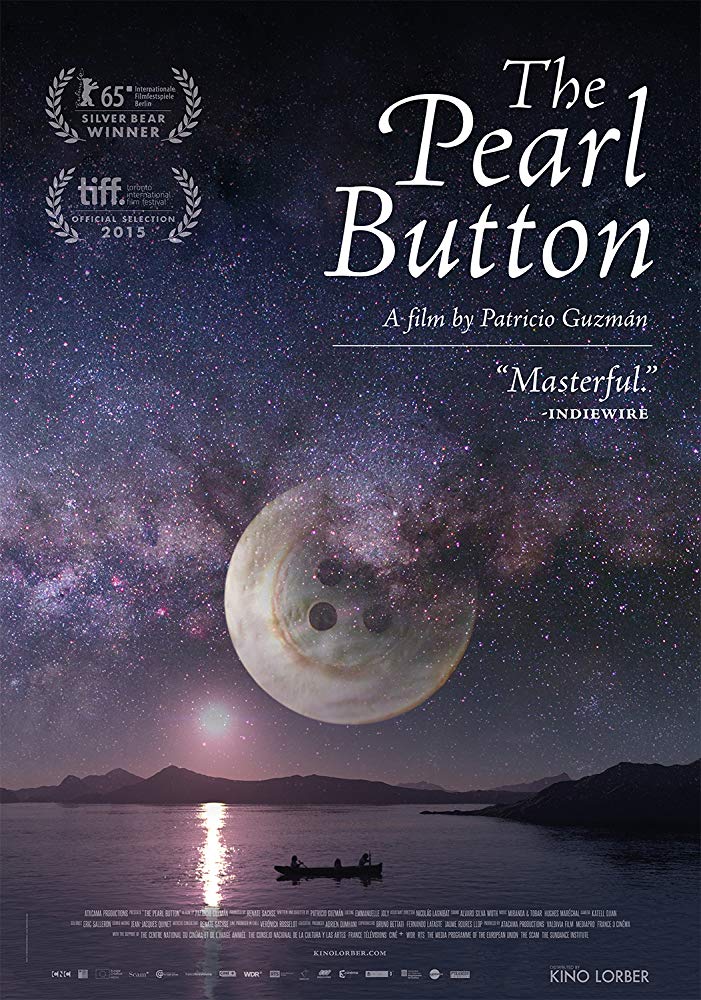
Alles fliesst, alles ist miteinander verbunden. Die majestätische Schönheit des Ozeans, die Kraft von Gedichten, aber auch die schreckliche Diktatur Pinochets und die Kolonialisierung Chiles während des 19. Jahrhunderts. Patricio Guzman findet dafür melancholisch fliessende Bilder in seinem Essayfilm. So wie den Kristallquader, worin ein Wassertropfen verschlossen ist. Er ist verkalkt, ein wenig bewegt er sich zwar in und her, doch man kann seine Erstarrung nicht lösen. So war es in Chile, nachdem Pinochet die gewählte Regierung von Sslvador Allende stürzte. In dem Kristallquader bewegt sich noch ein winziger Tropfen, verschlossen im Quarz. Blieb in der verhärteten chilenischen Gesellschaft dieser Zeit auch noch etwas übrig, von dem was vorher war? Guzman hat seinen Kristallquader vor schwarzem Hintergrund gefilmt. Er ist isoliert. Ganz anders als Chile mit seiner über 4000 Kilometer langen Küste, untrennbar verbunden mit dem Pazifik. Bis zur Kolonialisierung der Europäer lebte man am Wasser, am Leben. Erst nachdem die Europäer in Chile gelandet waren, wandte man sich ab vom Pazifik ins Landesinnere. Guzmans Film handelt von dieser Abkehr. Erinnerungen an die Wasservölker Westpatagoniens und ein Mahnmal für die Überlebenden der Pinochet Diktatur. Darüber hat Guzman seine Betrachtungen über das Weltlall und die Natur ausgedrückt. Wie ein Vermächtnis des grossen alten Mannes des chilenischen Films. - Everything flows, everything is connected. The majestic beauty of the ocean, the power of poetry, but also the terrible dictatorship of Pinochet and the colonization of Chile during the 19th century. Patricio Guzman finds melancholic flowing pictures in his essay film. Like the crystal cuboid in which a drop of water is sealed. He's calcified, he moves a little back and forth, but you can't release his numbness. This was the case in Chile after Pinochet overthrew the elected government of Sslvador Allende. A tiny drop still moves in the crystal cube, closed in quartz. Was there anything left of what was before in the hardened Chilean society of that time? Guzman filmed his crystal cuboid against a black background. He's isolated. Quite different from Chile with its more than 4000 km long coast, inseparably connected to the Pacific Ocean. Until the colonisation of Europeans, people lived by the water, alive. Only after the Europeans landed in Chile did they turn away from the Pacific towards the interior. Guzman's film is about this turning away. Memories of the water peoples of Western Patagonia and a memorial for the survivors of the Pinochet dictatorship. Guzman has expressed his reflections on the cosmos and nature. Like a legacy of the great old man of Chilean cinema.
Kommentare
Eure letzten Kommentare
Both beautiful and
Both beautiful and devastating. "The Pearl Button" combines cosmology, natural phenomena, history of indogenous people and Chilean political past into an impressive and lyrical documentary. Guzmán brings the pieces together with elegance you have to admire.
- Anmelden oder Registieren, um Kommentare verfassen zu können

Ich hatte zuvor schon einen
Ich hatte zuvor schon einen Film gesehen, der auf mich wie ein Naturwunder wirkte. Ich freue mich sehr auf diese VÖ
- Anmelden oder Registieren, um Kommentare verfassen zu können
Werde Teil der Community
Schreibe Kommentare, vote für Deine Favoriten oder sende uns Deinen Film-Vorschlag.