

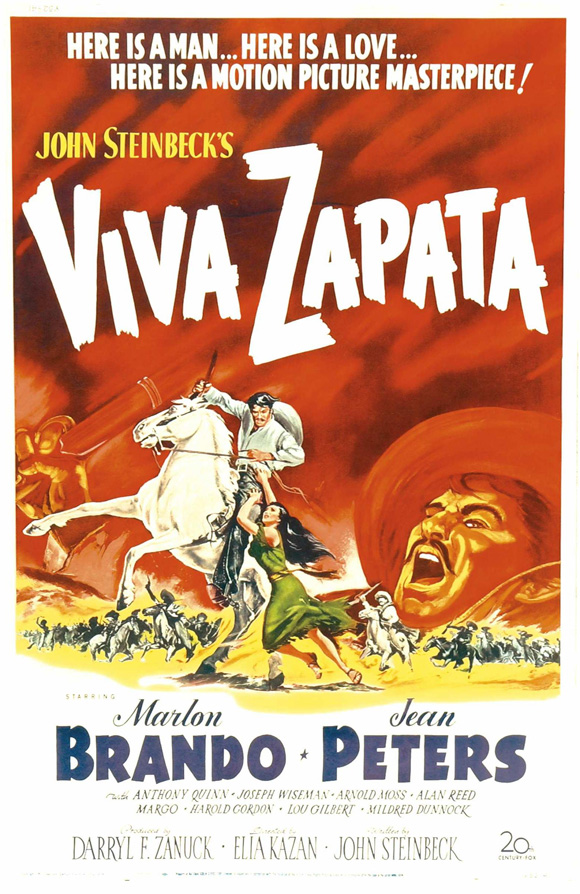
Marlon Brando war nicht nur der einflussreichste Schauspieler in der Geschichte Hollywoods, manchmal war er auch einer der ärgerlichsten. Er spielte in einigen der grössten Filme aller Zeiten mit, aber ganz vergnügt auch in einigen der schlechtesten! Brando war ein Poet und in seinen letzten Jahren eine arme Sau. Eines blieb er aber immer: Unverkennbar, herausfordernd und brillant! Seht euch auf youtube mal alte TV Filme vor 1947 mit ihm an und vergleicht sie mit denen danach: Brandos Spiel wirkt wie ausgewechselt! 1947 spielte er am Broadway zum ersten Mal Stanley Kowalski und das muss etwas in ihm ausgelöst haben. Vielleicht durchbrach Brando eine Barriere - es wirkt so als ob er nicht nur sich selbst mit dieser Rolle befreien wollte, sondern Generationen von Schauspielern nach ihm! Man sagt, die Schauspiel-Lehrerin Stella Adler hätte Brandos Stil entwickelt. Es ist wahr, Brando lernte in den Actor Studios, doch Adler brauchte nur eine Woche, um zu verkünden, Brando sei der grösste der Actors! Vermutlich hat sie einfach als erste sein Potential erkannt. Dasselbe kann man von Elia Kazan behaupten, der die wichtigsten frühen Filme mit Brando inszenierte. Kazan schaffte es, den Bühnenschauspieler zu einem Hollywood Star zu machen (was nicht selbstverständlich war, denn zuvor hatten die Studiobosse Brando eine Nasen Operation angeraten, da er nicht das Aussehen eines Hollywood Stars hätte). Viva Zapata war der zweite Film, den Kazan mit Brando drehte. Im Mittelpunkt seht die historische Figur von Emiliano Zapata, einem der grossen Anführer der mexikanischen Revolution von 1910. Zapata, eine Ikone der Linken, wurde 1919 durch ein Attentat ermordet. Zapata wird von Brando gespielt und es fällt schwer, sich überhaupt jemand anderen in der Rolle vorzustellen. Für den Film hat man ihm die Augenlider hochgeschoben, damit er wie ein "echter" Mexikaner aussieht - doch Brando als Zapata sieht einfach nur wie Brando aus. Kazan inszenierte Viva Zapata kurz bevor er vor dem House Un-American Activities Committee aussagen musste (bekanntlich gab er zahlreiche Namen von Kollegen preis) und aus diesem Grund wirkt der Film wohl wie ein Mix aus linker Revolutions-Sehnsucht und amerikanischer Propaganda: "Up there they protect political refugees! Up there they're a democracy! Up there they have a president, but he governs with the consent of the people!", schwärmt Zapata vom Nachbarland. In Wahrheit mischten die Amerikaner kräftig mit in der mexikanischen Revolution, da Präsident William Howard Taft einen Gebietsanspruch der USA bis zum Panama Kanal zum Wahlkampfthema machte. Das Elend in Mexiko wurde von Präsident Diaz verschärft. Ein Bruchteil der Bevölkerung besass nahezu 100 Prozent des Grund und Bodens, zusätzlich forcierte Diaz, dass die mexikanische Wirtschaft im Grunde von der USA übernommen wurde. Kazan verkehrt solche Fakten der Revolution und macht daraus eine klassische Tragödie mit einem tragischen Helden, Brudermord und Verrat. Zapata führt die Bauern an gegen die Grossgrundbesitzer, in dem Moment aber, da die Revolution erfolgreich ist, nimmt Zapata selbst die Züge der vormals Herrschenden an. Um den tatsächlich grossartig gemachten Film geniessen zu können, sollte man einfach den geschichtlichen Hintergrund ignorieren. Offensichtlich verrät der Film mehr über seinen Drehbuch-Autoren John Steinbeck und den Regisseur Elia Kazan als über die mexikanische Revolution... -
Marlon Brando was not only the most influential actor in Hollywood history, sometimes he was also one of the most annoying. He played in some of the greatest movies of all time, but he was also very happy in some of the worst! Brando was a poet and in his last years a poor sow. But he always remained one thing: unmistakable, challenging and brilliant! Watch on youtube old TV movies before 1947 with him and compare them with those afterwards: Brando's game seems to be changed! In 1947 he played Stanley Kowalski for the first time on Broadway and that must have triggered something in him. Maybe Brando broke through a barrier - it seems as if he not only wanted to free himself with this role, but generations of actors after him! It is said that acting teacher Stella Adler developed Brando's style. It's true, Brando studied in the Actor Studios, but it took Adler only a week to announce that Brando was the greatest of the Actors! She was probably the first to realize his potential. The same can be said for Elia Kazan, who directed the most important early films with Brando. Kazan managed to turn the stage actor into a Hollywood star (which wasn't self-evident, as the studio bosses had previously advised Brando to have a nose operation, as he wouldn't look like a Hollywood star). Viva Zapata was the second film Kazan made with Brando. The focus is on the historical figure of Emiliano Zapata, one of the great leaders of the Mexican Revolution of 1910. Zapata, an icon of the left, was assassinated in 1919. Zapata is played by Brando and it is difficult to imagine anyone else in the role. His eyelids were pushed up for the film to make him look like a "real" Mexican - but Brando as Zapata just looks like Brando. Kazan staged Viva Zapata shortly before he had to testify before the House Un-American Activities Committee (as you know he revealed numerous names of colleagues) and for this reason the film seems like a mix of left-wing revolutionary longing and American propaganda: "Up there they protect political refugees! Up there they're a democracy! Up there they have a president, but he governs with the consent of the people," Zapata enthuses about the neighbouring country. In truth, the Americans were heavily involved in the Mexican Revolution, as President William Howard Taft made a US territorial claim to the Panama Canal a campaign issue. The misery in Mexico was exacerbated by President Diaz. A fraction of the population owned nearly 100 percent of the land, and Diaz also forced the Mexican economy to be basically taken over by the United States. Kazan reverses such facts of the revolution and turns them into a classic tragedy with a tragic hero, fratricide and treason. Zapata leads the peasants against the big landowners, but the moment the revolution is successful, Zapata himself takes on the traits of the former rulers. In order to enjoy the film, which is actually a great one, you should simply ignore the historical background. Obviously, the film reveals more about its screenwriter John Steinbeck and director Elia Kazan than about the Mexican Revolution...
Translated with www.DeepL.com/Translator
Werde Teil der Community
Schreibe Kommentare, vote für Deine Favoriten oder sende uns Deinen Film-Vorschlag.