

Sa, 24/01/2026 - 12:14
Directed by:
Kaouther Ben Hania
Schauspieler:
Saja Kilani
Motaz Malhees
Clara Khoury
Video:
Trailer
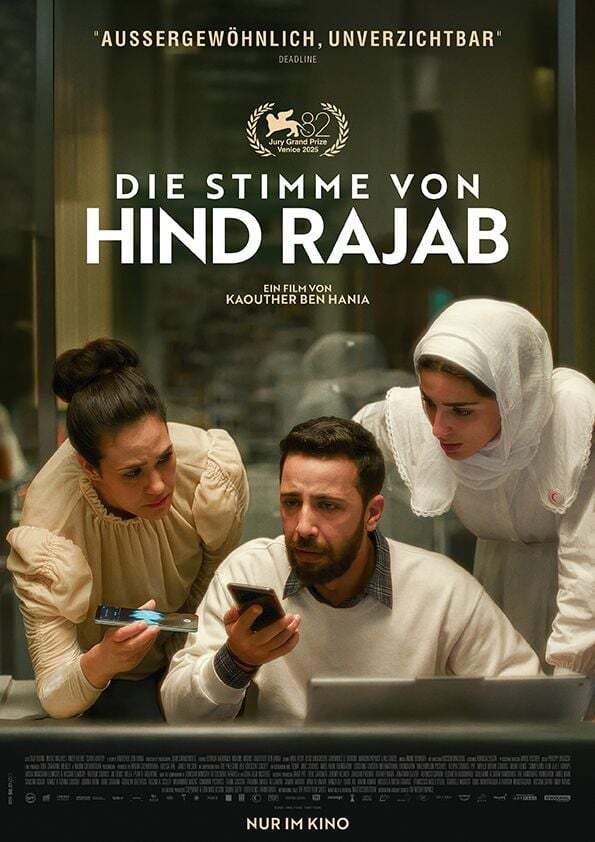
Am 29.1.24 ordnet die israelische Armee die Evakuierung des Stadtteils Tel Al-Hawa in Gaza an. Sechs Mitlgieder der Familie Hamadeh werden an diesem Tag in ihrem Auto eingeschlossen. Darunter die sechsjährige Hind Rajab. Die israelische Armee eröffnet das Feuer, tötet fünf Familien Mitglieder im Auto. Wie durch ein Wunder gelingt es der fünfzehnjährigen Layan vor ihrem Tod die palästinensische Hilfs-Organisation anzurufen. Hind Rajab bleibt allein im Auto zurück, umgeben von den Leichen ihrer Familie. Ihre einzige Hoffnung; ein Mobil-Telefon mit schlechtem Empfang. Kaouther Ben Hanias neuer Film beruht auf ihren Telefonaten. Die Audio Dateien werden also visualisiert, ihre zerbrechliche Stimme erfüllt die grosse Kino Leinwand. Gedreht im Breitbild-Format, mit vielen Nahaufnahmen. So erleben wir, wie Hind Rajab mit ihren Retterinnen telefoniert und über die schlimmste Zeit ihres Lebens spricht. Vieles spielt im Büro der palästinensischen Hilfsorganisation, so dass uns ein blutiges Spektakel erspart bleibt. Der Krieg findet ausserhalb des Bildes statt und so konzentrieren wir uns auf das Wesentliche: Das Leben des Kindes. Bei der Rettung gehts auch um die mörderische Bürokatie, denn obwohl sich das Auto nur wenige Minuten vom Büro entfernt befindet, verlangt das Protokoll eine Koordination mit der Armee. In diesem kafkaesken Labyrinth wird uns bewusst, dass es keinen "richtigen" Weg gibt. Hinds Leben gleicht einem Martyrium, der Film wirkt wie ein Weckruf. Er fordert uns auf, uns mit der Gewalt, die diesem Kind angetan wird, auseinander zu setzen. Nicht mit statistischen Zahlen oder dem Blutvergiessen des Krieges, sondern der physischen und psychischen Gewalt diesem Kind gegenüber. Einige von euch wendeten ein, dass eine solche Ästhetik uns an das Grauen gewöhnt, es gar trivialisiert. Das können wir gerne diskutieren. - On 29 January 2024, the Israeli army orders the evacuation of the Tel Al-Hawa neighbourhood in Gaza. Six members of the Hamadeh family are locked in their car that day. Among them is six-year-old Hind Rajab. The Israeli army opens fire, killing five family members in the car. Miraculously, fifteen-year-old Layan manages to call the Palestinian relief organisation before she dies. Hind Rajab is left alone in the car, surrounded by the bodies of her family. Her only hope is a mobile phone with poor reception. Kaouther Ben Hania's new film is based on her phone calls. The audio files are visualised, her fragile voice filling the big cinema screen. Shot in widescreen format, with many close-ups, we experience Hind Rajab talking on the phone with her rescuers about the worst time of her life. Much of the action takes place in the office of the Palestinian aid organisation, sparing us a bloody spectacle. The war takes place outside the frame, allowing us to focus on what is essential: the life of the child. The rescue also involves murderous bureaucracy, because although the car is only a few minutes away from the office, protocol requires coordination with the army. In this Kafkaesque labyrinth, we realise that there is no ‘right’ way. Hind's life is like martyrdom, and the film acts as a wake-up call. He challenges us to confront the violence inflicted on this child. Not with statistics or the bloodshed of war, but with the physical and psychological violence directed at this child. Some of you objected that such aesthetics accustom us to horror, even trivialise it. We are happy to discuss this.
Werde Teil der Community
Schreibe Kommentare, vote für Deine Favoriten oder sende uns Deinen Film-Vorschlag.